Why a Private Driver-Guide Beats Car Rentals on the Wild Atlantic Way
- Hemanth Bandlamudi

- May 21
- 6 min read
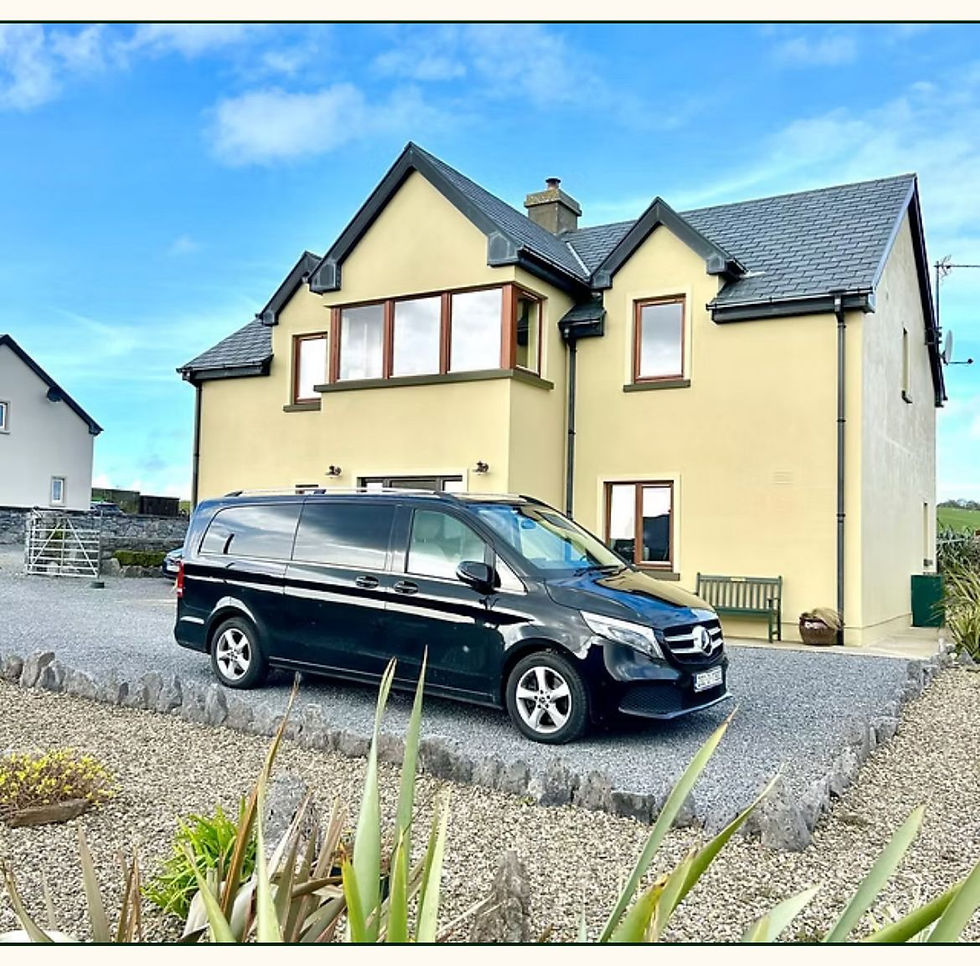
The Wild Atlantic Way looks deceptively simple on a map. A long coastal road. Dramatic scenery. Follow the signs and you'll be fine. That's the assumption most visitors arrive with, and it's the reason so many leave feeling like they only scratched the surface.
Renting a car and driving yourself sounds like freedom. In practice, it often becomes an exercise in white-knuckled navigation, confusing junctions, and pulling over to check Google Maps in a lay-by while a tractor waits patiently behind you.
There's a better way to travel this coast. Not easier in a watered-down sense, but richer. More personal. The kind of trip where you stop not because the GPS told you to, but because the man behind the wheel says quietly, "You'll want to see this."
The Road Doesn't Always Forgive Strangers
Western Ireland's roads are not built for tourists. They were built for locals, centuries before car rentals existed, and many of them haven't changed much since. Single-track boreens flanked by stone walls. Sharp bends with no visibility. The occasional sheep standing in the middle of the road with no intention of moving.
For an experienced local driver, this is Tuesday. For a first-time visitor used to motorway driving, it can derail a whole day. You're concentrating so hard on not scraping the passenger side against a ditch that you're barely registering the Atlantic unfolding on your left.
There's also the issue of what you miss. A rental car puts all the cognitive load on the driver. Your passengers might catch glimpses of something extraordinary, but you're watching the road. A private driver-guide absorbs that load entirely, which means you're free to actually look at where you are.
One couple from Minneapolis who travelled with Martin Hurley described it this way: they'd done a self-drive trip around Scotland the year before, and while they loved it, they realised afterwards they had spent most of the journey stressed. Ireland with Martin felt, in their words, like being handed the trip they actually wanted.
What a Local Guide Knows That No App Knows
Think about the last time a navigation app sent you somewhere technically correct but practically useless. The route that adds forty minutes because of a seasonal road closure. The "scenic viewpoint" that's been under scaffolding since 2022. The restaurant Google rates four and a half stars because tourists who didn't know any better left reviews.
Local knowledge isn't a marketing phrase. It's the difference between standing at the Cliffs of Moher shoulder-to-shoulder with three hundred other people at 11am, and arriving at a quieter coastal vantage point forty minutes before the coaches pull in, with the whole cliff face to yourself.
Martin Hurley has been guiding visitors through the west of Ireland for over twenty years. That kind of experience builds up in layers: which roads flood in autumn, where the best traditional session happens on a Wednesday night, the tiny family-run smokehouse on the Dingle Peninsula that doesn't advertise anywhere. You won't find any of it on TripAdvisor.
There's a difference between information and insight. A rental car gives you the former. A driver-guide gives you the latter. The stories behind the ruins you're driving past. The way the landscape shaped the people who settled here. The context that turns a nice view into something genuinely meaningful.
The Hidden Costs of Doing It Yourself
Car hire in Ireland costs money, but it's rarely just the daily rate. Add collision damage waivers, the fuel surcharge, the premium for an automatic transmission, airport pickup fees, and the toll roads you'll collect along the way. Then there's parking in Galway city, which combines both expense and mystery in roughly equal measure.
Beyond the financial, consider the time. A self-drive itinerary requires you to plan every day in advance, book parking, figure out what's actually worth stopping for versus what's just well-marketed, and troubleshoot when things don't go to plan. That's work. It might be enjoyable work for some travellers, but it's work.
A private tour removes that overhead entirely. Your guide handles navigation, timing, and logistics. Stops are chosen based on what the weather is doing that morning, which route has less traffic, and what genuinely suits your group. The itinerary breathes. It adjusts. If you want to spend an extra hour at Kylemore Abbey because something about it moves you, that's fine. Nobody's holding up a flag telling you to get back on the coach.
Are private tours more expensive upfront? Yes. But when you factor in what you actually get, the comparison shifts. You're not just buying transport. You're buying time, knowledge, and a version of the trip that couldn't exist without someone who genuinely knows this place.
The Moments You Can't Plan For
One evening near the Dingle Peninsula, a group travelling with Martin stopped at a pub in a village so small it barely appears on detailed maps. The session that night had a fiddle player who had been coming to that same corner of that same pub for thirty-one years. The music ran until midnight. Nobody had planned it. It just happened, because the driver knew where to be.
That kind of moment is why people still talk about their Ireland trip ten years later. Not the Cliffs of Moher, which are undeniably stunning but also genuinely crowded. The unexpected ones. The conversation with the farmer leaning on a gate. The fog rolling off the mountains at 8am as you drive a road with nobody else on it.
Self-driving doesn't preclude those moments, but it does make them less likely. When you're watching a Google Maps arrow and worrying about whether you'll make the next ferry, you're not available for serendipity. A good guide creates the conditions for it.
Tom and Jeri Gibbons, who travelled the west of Ireland with Martin, said something that stuck: "By the end of the tour it honestly felt like we were saying goodbye to a friend." That's not a customer satisfaction score. That's what happens when someone is genuinely invested in your experience, not just completing a route.
Who This Style of Travel Actually Suits
Private guided travel isn't for everyone, and it would be dishonest to pretend otherwise. If your idea of a perfect trip is total spontaneity with no plan whatsoever, a guided experience might feel too structured. If you love the challenge of navigation and figuring things out as you go, a rental car probably suits you fine.
But if you're visiting Ireland for the first time, if you're travelling as a couple or a small family group, if you have a particular connection to this place through ancestry or culture, or if you simply want the best possible version of this trip rather than a competent one, a private driver-guide is worth taking seriously.
It also suits people with specific interests. Heritage travellers tracing Irish roots. Whiskey enthusiasts who want access to distilleries not on the standard circuit. Photographers who need to be somewhere specific at a particular time of day. A good guide can build a trip around any of those things in a way that a generic itinerary never could.
The Wild Atlantic Way is one of the most spectacular coastal drives in Europe. The question isn't whether it's worth doing. It clearly is. The question is how much of it you actually want to experience, and whether you want someone beside you who's spent twenty years learning how to show it properly.
Ready to See Ireland the Right Way?
Martin Hurley Tours builds private itineraries around you: your timeline, your interests, the places you've always wanted to see, and the ones you didn't know existed. No tour buses, no rigid schedules, and no guesswork about whether you're in the right place at the right time.
If you're planning a trip to the west of Ireland and want to talk through what's possible, get in touch. The conversation costs nothing, and the trip it leads to could be the one you spend the next decade recommending to everyone you know.
Contact Martin Hurley Tours today to start planning your private Ireland journey.
Frequently Asked Questions
Is a private driver-guide much more expensive than renting a car?
The upfront cost is higher, but when you account for car hire fees, fuel, toll roads, parking, and the time you spend on logistics, the gap narrows considerably. You're also getting an entirely different experience: expert local knowledge, a fully planned itinerary, and none of the stress of driving unfamiliar roads.
How far in advance should I book?
For multi-day tours, especially during summer, booking several months ahead is advisable. Ireland's west coast is popular, and private tours with experienced guides fill up quickly. That said, it's always worth reaching out even with a shorter lead time to check availability.
Can the itinerary be changed once the tour starts?
Yes. One of the advantages of private travel over group tours is flexibility. If you want to spend longer somewhere, skip something that doesn't appeal, or take a detour based on a local recommendation, that's entirely possible. The itinerary serves you, not the other way around.
What regions does Martin Hurley Tours cover?
The focus is the west and south of Ireland: the Wild Atlantic Way, Dingle and the Kerry Peninsulas, Connemara, and Galway. These are the areas where local knowledge makes the biggest difference, and where the most rewarding off-the-beaten-track experiences are found.
Is this suitable for families travelling with children?
Absolutely. Private tours are particularly well-suited to families because the pace, stops, and day length can all be adjusted around the group. There's no pressure to keep up with strangers, and a good guide knows which stops genuinely engage younger travellers versus those that don't.
© 2026 Martin Hurley Tours. All rights reserved.
Comments